Monday, March 14, 2016

Your Candidates Health Care Plan


We are in the midst of a primary election in case you haven’t heard. As we are healthcare leaders and professionals it is important to be informed on health policy as it can directly affect our personal health and professional future. So what do the candidates plan on doing if elected in regards to health policy? Below is a short snapshot of what the various candidates’ plan, if they have one, would look like. Many of the ‘health policy plan’ facts are from the candidates’ websites; other information is pulled from various sources in an attempt to pull together a bipartisan and someone comprehensive picture of the candidate’s health policy ideas.


Ted Cruz (R): Proposed the ‘Health Care Choices Act’ that would allow people to buy health insurance across state lines. This bill would repeal Title I of ObamaCare undoing much of that law including the mandate to buy insurance, insurance marketplaces and subsidies.

Hillary Clinton (D): Continue supporting ObamaCare or the Affordable Care Act and proposed slowing the out of pocket costs. Continue the healthcare insurance exchanges and encourage states to expand Medicaid. 

Marco Rubio (R): Repeal ObamaCare and replace with consumer-centered health reforms that expand coverage and lower costs. Providing every American with an advanceable, refundable tax credit that can be used to purchase insurance. Reduce health care costs, promote innovation and ensure access for the most vulnerable. Finally promote innovation in Medicaid program by giving states per-capita block grants which preserves funding Medicaid’s unique populations.

Bernie Sanders (D): Build upon ObamaCare but expand into universal health care federally administrated. Build on the Medicare program. Make federal investments on training health care providers. Separate health insurance from employment.

Donald Trump (R): Trumps plan was not listed on his website and has received intense criticism for being vague and not explaining how he will complete his plan. The information I did find is listed as follows: Repeal Affordable Care Act. Allow sale of health insurance across state lines. Health insurance premiums fully tax deductible. Establish individual HSA. Require transparency from providers. Restructure Medicaid to convert it to block grants run by the states. Remove barriers to entry for international pharmaceutical companies.

I would encourage all, not just health policy leaders and health professionals, to go to each candidate’s website and see how your view of America’s health care future lines up with your candidate’s vision. I found it a fascinating study in the various candidate’s tone and ideals for America.


Share Your Thoughts:
What do you think would be the best way to improve Health Policy? What would you like healthcare to look like in America? How should healthcare policy affect healthcare leadership on the micro and macro scale?


Thank you to Baylor University MBA in Healthcare for helping their students stay informed and educated on health policy and encouraging them to enhance the future of healthcare worldwide.


Sources:

Friday, November 6, 2015

Glitches with ICD-10 Implementation


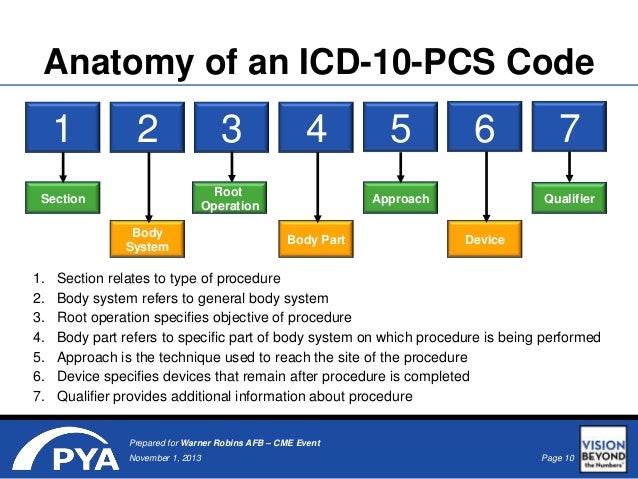
Until this point most billing is done with ICD-9 codes. These billing codes would be sent from a hospital, clinic, physician's office etc. to a private insurance company or to Medicare and Medicaid offices to let them know what procedure was performed. However now the billing codes need to be changed to ICD-10. ICD-10 is updated and more specific based on the diseases, ailments and surgeries we have in 2015 versus many years ago when ICD-9 were first coded. This means all the procedures, old and new, need to be assigned to this new form of ICD-10 coding. 

Believe it or not, not everything has going completely according to plan with the recent ICD-10 implementation, and there have been “glitches” so to speak.

An article published by Healthcare IT News has noted some of these glitches and some of the response.

1. Private payers want your coding to be right. Although it’s true that CMS is allowing a year grace period to allow coders to get the hang of it, many private payers are not necessarily committed to the same standard. Some practitioners are even giving themselves an extra hour just for coding. 

2. “Clearinghouses.” Some clearinghouses cannot go through until they have been cleared, and not all new codes are currently being recognized. This may take some time.

3. “Referrals.” For some physicians this is the lifeblood of their practice. They rely on referrals for much of their patient clientele. Somehow ICD-10 was not allowing one physician to give, or receive referrals.

4. “Eligibility checks. Some insurance websites were unavailable for the first 2 days. We were not able to check eligibility on some patients. We may or may not be paid for these visits and according to our insurance contracts; we are not allowed to bill the patient. Any patients I saw on the first 2 days of October who we were unable to verify their insurance was treated for free and there's nothing I can do about it. I know some people will say not to see them without this verification but they were sick. What good is a doctor who doesn't treat sick patients?”

5. “Wait times.” Billers always have a difficult time contacting payers, it’s probably their biggest complaint. There was a story of one biller who had to be on hold for three hours with their payer.

In time, the glitches will decrease. Some of them are obviously very short term while other will take longer to sort out, but one thing is certain, everyone will be a lot happier when they are resolved.  

Share your Thoughts:
Did you know about this change from ICD-9 to ICD-10 codes? Do you think this was a necessary update for healthcare policy? How do you think this healthcare policy change will impact billing to private and public insurance? 


Thank you to Baylor University MBA in Healthcare for keeping their students up to date on the changes and future in healthcare policy. 


Sources:
http://www.healthcareitnews.com/news/6-glaring-disruptive-icd-10-glitches

http://image.slidesharecdn.com/ppt2013icd-10preparationwrafbfinal11012013-131108070936-phpapp02/95/icd10-presentation-takes-coding-to-new-heights-11-638.jpg?cb=1383894713

Monday, April 13, 2015

New Solutions to Healthcare Delivery


A fascinating blog was recently written in a Harvard Business Review blog explaining why our efforts to change the way we delivery healthcare might not work. 

For a while now the discussion has focused around how our healthcare providers are compensated – fee for service vs. paying for patient outcomes. It’s no secret that many providers are motivated and incentivized by their payment structure, however this blog argues, rather convincingly, that we need to change much more than the payment structure if we want to change how healthcare is delivered today. This blog offers 4 ways that we might be able to achieve the kind of change we are looking for.

1. “Let doctors be doctors, not managers.” It’s true that physicians now days have so much more to do than just provide care for their patients. Perhaps if we allow physicians to just concentrate on the healthcare delivery, then we could see more efficient outcomes.

2. “Develop standard protocols for care.” Relativity is the enemy of efficiency. If we can help hospitals and providers to offer care using standardization, we will see more efficient outcomes.

3. “Hold people accountable for the little things. An endemic problem in many healthcare institutions is the unfinished task. Who is accountable for stocking the amoxicillin? For making sure the bathrooms are clean? For fixing patient beds? For paying vendors? These small tasks make a big difference to the experiences—and survival—of patients. We use simple tools like pareto analysis of drug use and reports of patient-centered outcomes to hold providers and their managers accountable to the care they deliver.”

4. “Invest in technologies that promote efficiency and transparency” Change is difficult for most of us, but it’s even more difficult for healthcare providers that have been doing things the same for decades. The average healthcare provider today is not a spring chicken, and they are not used to the technology changes that many of us are. However, this is an important step to moving healthcare into a more efficient industry.

I believe that these four suggestions are spot on. It’s amazing to know that healthcare challenges are global, and we can learn a lot about ourselves by looking abroad.


Share your Thoughts:

What do you think about the suggestions to change/solve the healthcare challenges? Do you think health policy should be involved in implementing some of these ideas?


Thank you to Baylor MBA Healthcare Program for encouraging creative solutions to complex health care and policy difficulties.


Sources:
https://hbr.org/2015/04/fixing-health-care-will-require-more-than-a-new-payment-system

https://rmsbunkerblog.files.wordpress.com/2013/03/what-is-an-aco.jpg


Friday, January 2, 2015

Big Data Results: Healthcare


‘Big Data’ is a buzz phrase that you hear a lot these days, but not necessarily something that you hear being associated with healthcare. Other industries like the airlines or just about any manufacturing company has used big data to analyze the hundreds of thousands and millions of flights, or used when producing a ‘widget’ that millions of Americans use. Big data has been effective for these industries for over a decade for the simple fact that these industries can use information to predict demand of their services.

Recently the Robert Wood Johnson Foundation has supported an initiative that is examining whether the ACA’s health policy coverage expansion has been as effective for patients and healthcare providers. The foundation used data from 14,300 providers caring for about 5.8 million patients. Some of the results of this initiative were fascinating.

“There was no evidence that patients with previously untreated illnesses were taxing primary care capacity during the first nine months of 2014 (though new patients may require more time to schedule and attend appointments). New patient visits to primary care doctors represented 21.8% of all visits this year through September, compared with 21.6% for the same months in 2013. And minimal changes in national rates of three major chronic diseases—diabetes, high-blood pressure and elevated cholesterol— provided no support for the concern that new patients were sicker than they have been in the past.”

This kind of data analysis can help everyone involved in healthcare from patients, physicians, hospital facilities and even health policy makers. Using this data analysis is easier said than done however. Let’s not forget that healthcare information is highly protected by HIPPA laws, and is worth millions of dollars by those trying to hack into systems and steal this information.

Be that as it may, the value for healthcare managers by leveraging this information is there, and should be used effectively in the future.


Share your Thoughts:
Do you think using healthcare data can help health policy more focused and effective? Do you think these types of analyses are important for tax payers and politicians to use in shaping American health policy? Do you think the results discussed are of interest?


Thank you to Baylor University MBA in Healthcare program for helping their students focus on real world health care practice and policy. 


Sources:

http://mhealthwatch.com/wp-content/uploads/2013/11/Big-Data-Health-Initiative-Unveiled-at-White-House-Event-300x189.png 

Monday, August 18, 2014

Pricing Transparency: Healthcare Policy


It is absolutely amazing how difficult it is sometimes to find out how much it costs to go to a healthcare facility, either a hospital and/or a clinic and receive a procedure or treatment. If you have ever asked for the price of a procedure you know how difficult it is to get a price or even an answer. Those of us with high deductible healthcare plans, or even no healthcare have figuratively (or maybe literally) pulled out our hair trying to get an answer on ‘what is this going to cost me to come in and get something done!’

Accomplishing healthcare cost transparency is a step in the right direction if our country is ever going to get our costs under control.

A recent opinion article written by a healthcare executive, Douglas Ghertner, criticized an attempt by CMS to release information about how we might become better healthcare consumers in an article published by CNBC. In the article Ghertner points out that while CMS’ intentions may have been sincere, the attempt neglected to capture what costs are truly conveyed to the actual patients. In point, CMS uses hospital charges and did not actually take into account what the reimbursements were after Medicare, Medicaid and insurers have negotiated what they would actually pay the hospital.

In the noted study, CMS also neglected to take into account quality of care measures that hospitals monitor. Certainly they don’t believe that all healthcare is created equal, and could probably agree that some measure should be in place for consumers to judge the quality of care they receive.

Ghertner also mentions in his article the increase need for this healthcare cost transparency, noting a study that showed the rise in high deductible healthcare plans.

Finally, Ghertner talks about the increasing need from a national perspective to increase this transparency.

“A recent analysis by West Health Policy Institute suggests that transparency initiatives could cut $100 billion over 10 years from health spending. This may be a small step towards reducing the trillions of dollars we spend each year on health care in this country, but it is a step in the right direction. Additionally, as we improve our ability to make public provider level outcomes from a quality perspective, the patient can assess the value of health-care services, forcing providers to compete on quality as well as cost.”


Hopefully those of us who manage healthcare today will be able to take additional steps to assist patients healthcare cost decisions. 

Share your Thoughts:

Have you ever tried to find out the price of a procedure before having the procedure? Was it difficult? Do you think transparency in healthcare costs is important? Do you think that health care policy should be transparent? What types of improvements would  you like to see in your healthcare?


Thank you to Baylor University MBA Healthcare for an education that encourages critical and creative thinking to solve complex healthcare and business problems. 

Sources:
https://sph.uth.edu/content/uploads/2012/04/Health-Policy-button.png


Tuesday, June 3, 2014

American's Don't Feel Impacted from the ACA


Interesting poll results came out last week concerning American’s attitudes towards the Affordable Care Act. According to the latest Kaiser Health Tracking Poll 

"More than four years after passage of the Affordable Care Act (ACA) and several months into the first year of its coverage expansions, most Americans do not feel personally impacted by the law. Among the minority who say they have felt an impact, more feel they have been harmed than helped by the law, with Republicans more likely to say they have been hurt and Democrats more likely to say they have been helped."

However most would like politicians to stop talking about it. 51% of registered voters say they are tired of hearing candidates for Congress talk about health care law and want them to focus more on other issues like jobs. These results were also found similarly within Gallop poll findings. 

The Gallop poll results reiterated the same results regarding the health policy with more detail,

"About one month after the new healthcare exchanges closed with over 8 million new enrollees, there has been little substantial change in Americans' perception that the healthcare law has helped them. Most Americans say the law has had no impact on their healthcare situation, while those who do perceive an effect are more likely to say it has hurt them rather than helped them. The majority of Americans have reported that the Affordable Care Act has had little effect on their personal situations since Gallup first asked this question in early 2012. In more recent months, after the exchange-based enrollment opened up, Americans have gradually become more likely to indicate that the law has had an effect -- both positive and negative. The current 24% who say the law has hurt them is by one percentage point the highest measured, while the 14% who say the law has helped them is also within one point of being the highest measured on that dimension. In all instances, across seven different surveys, Americans have been at least marginally more likely to say the law has hurt them and their families than to say it has helped them.Americans' views on how the healthcare law has affected them personally are predictably partisan, as are almost all attitudes about Obamacare."


Share Your Thoughts:
Do you feel impacted by the Health Policy of the Affordable Care Act? If you were impacted by the change in health policy was it positive or negative? Do you feel this political debate about health policy is overdone or still of concern?


Thank you to Baylor MBA in Healthcare Program for helping it's students understand the impact of health policy in America.


Sources:
http://www.huffingtonpost.com/2014/05/30/aca-poll_n_5420425.html
https://s3.amazonaws.com/coursera/topics/healthpolicy/large-icon.png


Saturday, March 8, 2014

Healthcare Fraud Uncovered


Something those of us who are learning to become leaders in the healthcare industry are being taught is that we have to keep our eyes out for those who might be taking advantage of the system. Many of my posts have been about the significant costs of healthcare, totaling hundreds of millions of dollars on an annual basis. 

We have also discussed the causes of this cost, and why it continues to increase. But every once in a while, we are reminded about one of the causes of rising healthcare costs, and it may not be what you think.

Today it is being reported that one of the biggest scams in healthcare history is coming to a verdict. 
"Between 2006 and 2012, federal law enforcement authorities allege more than 230 Dallas-area home health care agencies funneled patients to an Arlington physician, Joseph Megwa to approve $100.5 million in care they did not need. The owner of the largest home care agency in the case, Nigerian-American Ferguson Ikhile of Irving, has pleaded guilty."


In a separate case, more than 500 home health agencies were accused of sending their patients for unnecessary care to a man, who gave 347 million dollars worth of unnecessary treatments. In both cases it was reported that most of the elderly patients who participated in the schemes did not even know what was going on. 

With this information, it’s important to realize that most individuals just simply don’t understand all the healthcare jargon like those of us training to become healthcare administrators. It’s always a good idea to take a step back and remember the entire scope of our responsibility going forward.


SHARE YOUR THOUGHTS:
Do you think there is enough health policy preventing healthcare fraud? How would you feel if your elderly loved one had been taken advantage of? Who do you think is the biggest victim in these types of fraudulent cases?


Special thank you to Baylor University Healthcare MBA program for the education to encourage honest, efficient healthcare policy and leadership. 


Sources: