Thursday, January 5, 2017

An ACA Replacement coming in 2017?


There is a lot of discussion and conjecture leading up to the possible changes President-Elect Donald Trump may make to the Affordable Care Act (ACA) once inaugurated later this month.

What has been somewhat surprising is the number of Democratic lawmakers that may be open to Trump’s ACA changes. A repeal of the ACA is expected to take place quickly but what will not happen quickly is the introduction of a healthcare replacement bill. 

Many Republican lawmakers are estimating three to four years until the replacement bill is up for a vote. At that time the replacement bill would need full Republican support and it's estimated only eight Democrats for the hypothetical healthcare bill to be passed.

The timing of the assumed bill is not a coincidence it is timed due the re-election of twenty-five Democrats. Using their re-election to possibly influence their support. It’s a situation where health leaders recognize that their jobs and the care of their patients involves a lot of politics and health policy.

It is a new world of health care and health policy each election cycle. Hopefully keeping in mind what is best for health leaders and the American population at large.


Share your Thoughts:
Do you think health policy will change in 2017? Do you think health policy should impact health management and leadership? What health policies would you want to change, if any?


Thank you to Baylor University MBA in Healthcare for the encouragement to problem solve and persevere to build strong healthcare leadership.


Sources:
https://www.advisory.com/daily-briefing/2016/12/16/aca-replacement?WT.mc_id=Email|DailyBriefing+Headline|DBA|DB|2016Dec16|ATestDB2016Dec16||||&elq_cid=1339315&x_id=003C000001tclvqIAA


https://www.healthinsurance.org/assets/2016/11/trump-repeal-obamacare-1560x816.jpg

Monday, September 19, 2016

Surgeons Upset with CMS Coding Demands


The Center for Medicare and Medicaid Services (CMS) has recently proposed a health policy change that has many medical organizations in protest. CMS wants to require surgeons to document every ten minutes their post-operative patient care activities for certain surgical procedures. What does that mean? It means that time surgeons spend out of the OR working on patient cases would need to be documented every 10 minutes. This healthy policy change that could affect reimbursement rates from CMS has many surgeons up in arms.

In a letter from the American College of Surgeons to CMS indicated that patient care cannot be easily coded in 10 minute increments. Many surgeons review patient files throughout the day and switch from one task to another. The letter stated the chaos that could ensue with a 10-minute coding mandate.

‘The surgeon would have to stop the timer on the first patient’s pathology review, start and stop timers on the second and third patients while answering the phone and then restart the timer on the first patient in the office. This often happens many times in a day.’

The American Medical Association sites the burden and burnout that this policy would create.
‘Asking physicians and their staff to use 10-minute increments to document all their non-operating room patient care activities is by itself and incredible burden, and especially so during MACRA implementation-the most significant payment system change in 25 years.’

It seems clear that CMS is getting strong pushback on this new proposed health policy change. We will have to see if CMS holds to its policy or alters based on the burden physicians are already feeling.


Share your Thoughts:
Do you think this health policy regarding 10-minute coding is reasonable or too burdensome? What do you think CMS should do? What would you do if you were one of these surgeons?


Thank you to Baylor University MBA in Healthcare program for providing a setting of learning and discussion to solve complex health policy issues.


Sources:
https://ryortho.com/wp-content/uploads/2013/08/CMS_AndrewHuthSurgeonChecklist_WEB.jpg

Monday, June 27, 2016

Yuck Factor: Hospital Hygiene


In a popular TV show a character gave a comical alternative name for the iPhone he named it, ‘a slippery germ brick.’ Well in the Henry Ford Hospital that is exactly what the administrative leadership was trying to display to their staff. In an effort to increase hygiene practices hospital leadership swabbed commonly touched surfaces and items such as doorknobs and phones and then showed the staff what was germs were lingering around.

Healthcare professionals can become complacent or numb about the fact that they work in a germ infested environment. This visual experiment was a tangible reminder that washing hands and following proper procedure helps them and their patients.

But what continues to be the best form of hygiene compliance and lessened bacterial infections, patients. Patients speaking out and asking health care professionals to wash their hands when they enter their room. It’s not rude, it’s a reminder. A hand washing health policy is only as good as those who follow it and its always better to be without a bacterial infection.


Share your Thoughts:
What health policy would you use to encourage hygiene in a hospital? Have you ever been a patient and asked a health care professional to wash their hands? Are you a health care professional, what is the health policy where you work?


Thank you to Baylor MBA in Healthcare for educating and encouraging lifelong learning and leadership.


Sources:


Monday, March 14, 2016

Your Candidates Health Care Plan


We are in the midst of a primary election in case you haven’t heard. As we are healthcare leaders and professionals it is important to be informed on health policy as it can directly affect our personal health and professional future. So what do the candidates plan on doing if elected in regards to health policy? Below is a short snapshot of what the various candidates’ plan, if they have one, would look like. Many of the ‘health policy plan’ facts are from the candidates’ websites; other information is pulled from various sources in an attempt to pull together a bipartisan and someone comprehensive picture of the candidate’s health policy ideas.


Ted Cruz (R): Proposed the ‘Health Care Choices Act’ that would allow people to buy health insurance across state lines. This bill would repeal Title I of ObamaCare undoing much of that law including the mandate to buy insurance, insurance marketplaces and subsidies.

Hillary Clinton (D): Continue supporting ObamaCare or the Affordable Care Act and proposed slowing the out of pocket costs. Continue the healthcare insurance exchanges and encourage states to expand Medicaid. 

Marco Rubio (R): Repeal ObamaCare and replace with consumer-centered health reforms that expand coverage and lower costs. Providing every American with an advanceable, refundable tax credit that can be used to purchase insurance. Reduce health care costs, promote innovation and ensure access for the most vulnerable. Finally promote innovation in Medicaid program by giving states per-capita block grants which preserves funding Medicaid’s unique populations.

Bernie Sanders (D): Build upon ObamaCare but expand into universal health care federally administrated. Build on the Medicare program. Make federal investments on training health care providers. Separate health insurance from employment.

Donald Trump (R): Trumps plan was not listed on his website and has received intense criticism for being vague and not explaining how he will complete his plan. The information I did find is listed as follows: Repeal Affordable Care Act. Allow sale of health insurance across state lines. Health insurance premiums fully tax deductible. Establish individual HSA. Require transparency from providers. Restructure Medicaid to convert it to block grants run by the states. Remove barriers to entry for international pharmaceutical companies.

I would encourage all, not just health policy leaders and health professionals, to go to each candidate’s website and see how your view of America’s health care future lines up with your candidate’s vision. I found it a fascinating study in the various candidate’s tone and ideals for America.


Share Your Thoughts:
What do you think would be the best way to improve Health Policy? What would you like healthcare to look like in America? How should healthcare policy affect healthcare leadership on the micro and macro scale?


Thank you to Baylor University MBA in Healthcare for helping their students stay informed and educated on health policy and encouraging them to enhance the future of healthcare worldwide.


Sources:

Friday, November 6, 2015

Glitches with ICD-10 Implementation


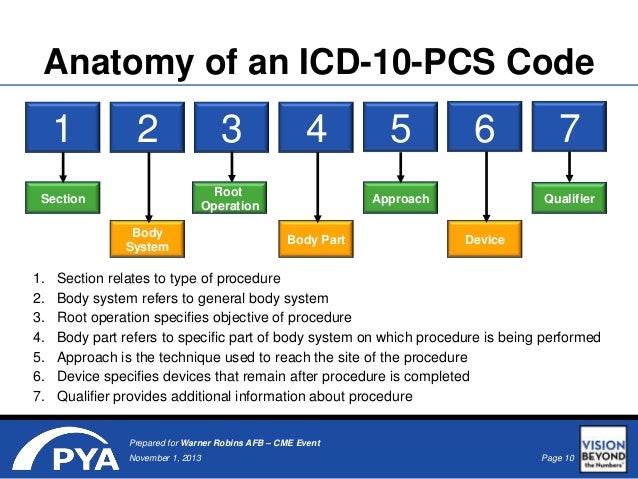
Until this point most billing is done with ICD-9 codes. These billing codes would be sent from a hospital, clinic, physician's office etc. to a private insurance company or to Medicare and Medicaid offices to let them know what procedure was performed. However now the billing codes need to be changed to ICD-10. ICD-10 is updated and more specific based on the diseases, ailments and surgeries we have in 2015 versus many years ago when ICD-9 were first coded. This means all the procedures, old and new, need to be assigned to this new form of ICD-10 coding. 

Believe it or not, not everything has going completely according to plan with the recent ICD-10 implementation, and there have been “glitches” so to speak.

An article published by Healthcare IT News has noted some of these glitches and some of the response.

1. Private payers want your coding to be right. Although it’s true that CMS is allowing a year grace period to allow coders to get the hang of it, many private payers are not necessarily committed to the same standard. Some practitioners are even giving themselves an extra hour just for coding. 

2. “Clearinghouses.” Some clearinghouses cannot go through until they have been cleared, and not all new codes are currently being recognized. This may take some time.

3. “Referrals.” For some physicians this is the lifeblood of their practice. They rely on referrals for much of their patient clientele. Somehow ICD-10 was not allowing one physician to give, or receive referrals.

4. “Eligibility checks. Some insurance websites were unavailable for the first 2 days. We were not able to check eligibility on some patients. We may or may not be paid for these visits and according to our insurance contracts; we are not allowed to bill the patient. Any patients I saw on the first 2 days of October who we were unable to verify their insurance was treated for free and there's nothing I can do about it. I know some people will say not to see them without this verification but they were sick. What good is a doctor who doesn't treat sick patients?”

5. “Wait times.” Billers always have a difficult time contacting payers, it’s probably their biggest complaint. There was a story of one biller who had to be on hold for three hours with their payer.

In time, the glitches will decrease. Some of them are obviously very short term while other will take longer to sort out, but one thing is certain, everyone will be a lot happier when they are resolved.  

Share your Thoughts:
Did you know about this change from ICD-9 to ICD-10 codes? Do you think this was a necessary update for healthcare policy? How do you think this healthcare policy change will impact billing to private and public insurance? 


Thank you to Baylor University MBA in Healthcare for keeping their students up to date on the changes and future in healthcare policy. 


Sources:
http://www.healthcareitnews.com/news/6-glaring-disruptive-icd-10-glitches

http://image.slidesharecdn.com/ppt2013icd-10preparationwrafbfinal11012013-131108070936-phpapp02/95/icd10-presentation-takes-coding-to-new-heights-11-638.jpg?cb=1383894713

Monday, April 13, 2015

New Solutions to Healthcare Delivery


A fascinating blog was recently written in a Harvard Business Review blog explaining why our efforts to change the way we delivery healthcare might not work. 

For a while now the discussion has focused around how our healthcare providers are compensated – fee for service vs. paying for patient outcomes. It’s no secret that many providers are motivated and incentivized by their payment structure, however this blog argues, rather convincingly, that we need to change much more than the payment structure if we want to change how healthcare is delivered today. This blog offers 4 ways that we might be able to achieve the kind of change we are looking for.

1. “Let doctors be doctors, not managers.” It’s true that physicians now days have so much more to do than just provide care for their patients. Perhaps if we allow physicians to just concentrate on the healthcare delivery, then we could see more efficient outcomes.

2. “Develop standard protocols for care.” Relativity is the enemy of efficiency. If we can help hospitals and providers to offer care using standardization, we will see more efficient outcomes.

3. “Hold people accountable for the little things. An endemic problem in many healthcare institutions is the unfinished task. Who is accountable for stocking the amoxicillin? For making sure the bathrooms are clean? For fixing patient beds? For paying vendors? These small tasks make a big difference to the experiences—and survival—of patients. We use simple tools like pareto analysis of drug use and reports of patient-centered outcomes to hold providers and their managers accountable to the care they deliver.”

4. “Invest in technologies that promote efficiency and transparency” Change is difficult for most of us, but it’s even more difficult for healthcare providers that have been doing things the same for decades. The average healthcare provider today is not a spring chicken, and they are not used to the technology changes that many of us are. However, this is an important step to moving healthcare into a more efficient industry.

I believe that these four suggestions are spot on. It’s amazing to know that healthcare challenges are global, and we can learn a lot about ourselves by looking abroad.


Share your Thoughts:

What do you think about the suggestions to change/solve the healthcare challenges? Do you think health policy should be involved in implementing some of these ideas?


Thank you to Baylor MBA Healthcare Program for encouraging creative solutions to complex health care and policy difficulties.


Sources:
https://hbr.org/2015/04/fixing-health-care-will-require-more-than-a-new-payment-system

https://rmsbunkerblog.files.wordpress.com/2013/03/what-is-an-aco.jpg


Friday, January 2, 2015

Big Data Results: Healthcare


‘Big Data’ is a buzz phrase that you hear a lot these days, but not necessarily something that you hear being associated with healthcare. Other industries like the airlines or just about any manufacturing company has used big data to analyze the hundreds of thousands and millions of flights, or used when producing a ‘widget’ that millions of Americans use. Big data has been effective for these industries for over a decade for the simple fact that these industries can use information to predict demand of their services.

Recently the Robert Wood Johnson Foundation has supported an initiative that is examining whether the ACA’s health policy coverage expansion has been as effective for patients and healthcare providers. The foundation used data from 14,300 providers caring for about 5.8 million patients. Some of the results of this initiative were fascinating.

“There was no evidence that patients with previously untreated illnesses were taxing primary care capacity during the first nine months of 2014 (though new patients may require more time to schedule and attend appointments). New patient visits to primary care doctors represented 21.8% of all visits this year through September, compared with 21.6% for the same months in 2013. And minimal changes in national rates of three major chronic diseases—diabetes, high-blood pressure and elevated cholesterol— provided no support for the concern that new patients were sicker than they have been in the past.”

This kind of data analysis can help everyone involved in healthcare from patients, physicians, hospital facilities and even health policy makers. Using this data analysis is easier said than done however. Let’s not forget that healthcare information is highly protected by HIPPA laws, and is worth millions of dollars by those trying to hack into systems and steal this information.

Be that as it may, the value for healthcare managers by leveraging this information is there, and should be used effectively in the future.


Share your Thoughts:
Do you think using healthcare data can help health policy more focused and effective? Do you think these types of analyses are important for tax payers and politicians to use in shaping American health policy? Do you think the results discussed are of interest?


Thank you to Baylor University MBA in Healthcare program for helping their students focus on real world health care practice and policy. 


Sources:

http://mhealthwatch.com/wp-content/uploads/2013/11/Big-Data-Health-Initiative-Unveiled-at-White-House-Event-300x189.png